

Introduction
Pottery and especially pottery sherds are most often present at archaeological sites worldwide. They are preserved for long because of physical parameters of their matrix. Application of radiocarbon gives a hope for site dating.
Is Carbon Dating Possible for Pottery?
Different types of ceramic products became widely used in Eastern Europe since the end of VII–VI millennium BC. Manufacture of early pottery was closely associated with technologies using organic additives (grass, straw, river and lake silt and manure) for plasticity and strength.
Radiocarbon analysis can provide direct chronological information for pottery when an appropriate carbon fraction associated with manufacture or use can be reliably identified and isolated. Pottery may contain carbon from several sources, so sample selection, pretreatment and interpretation are essential when relating a measured radiocarbon age to the archaeological event of interest.
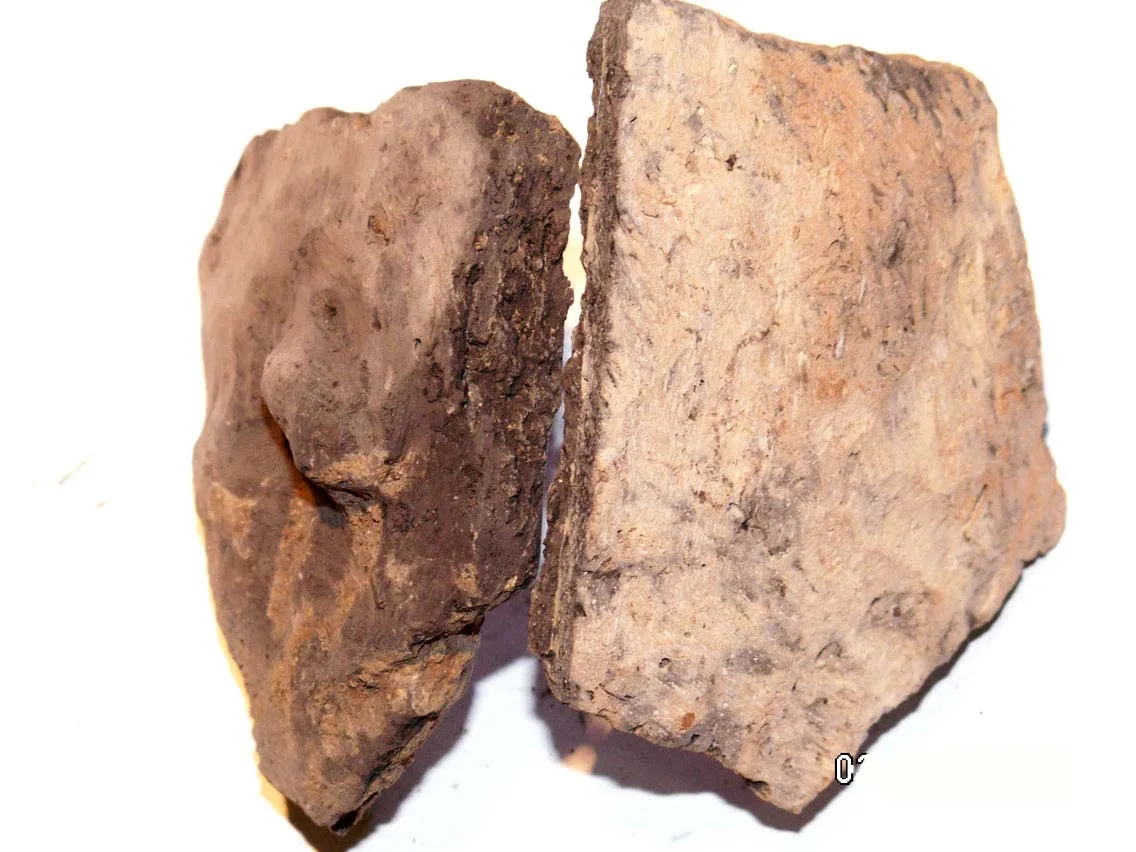
Archaeological ceramic sample
Carbon Sources
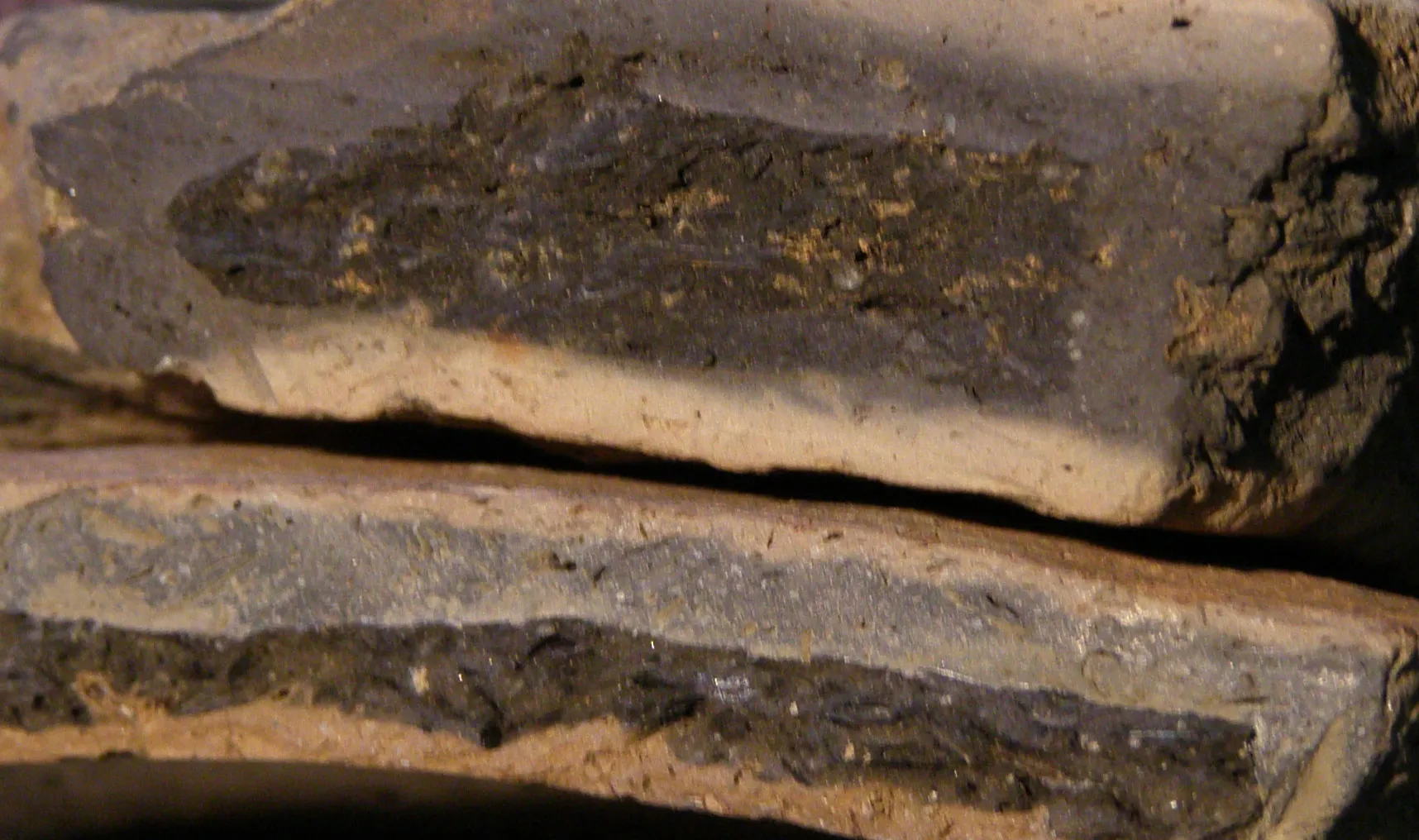
Carbon sources in pottery
Datable carbon in pottery could be of different origin: added into clay during production (for plasticity and strength), or penetrating into pottery matrix during food preparation or oil lighting. Both are transformed into fine coal inside the alumosilicate matrix.
The carbon content of coal inclusions after annealing ceramics is about 0.6–2% of total weight. This carbon is relatively well protected from oxidation inside the aluminum-silicate matrix.
When Pottery Can Be Carbon Dated
As datable carbon concentration in pottery can be 0.5%–2.0%, it must be concentrated and transformed into counting media. Modern technology (Skripkin & Kovalyukh, 1998) allows processing pottery using direct pyrolysis. 1.0% of carbon in pottery body corresponds to about 1.0 g of benzene for LS counting.
The advantage of the modern benzene line is that it allows C-14 study of samples with trace amounts of datable carbon, including high ash content plants, bottom sediments and archaeological ceramics.
Ceramic sherds for dating
Sample Processing Steps
- Estimation of carbon mass in sample
- Estimation of possible quality of dating results
- Estimation of individual resources and cost
- Sample pre-treatment
- Sample milling
- Carbide production by pyrolysis
- Acetylene production
- Preparing benzene
- Counting of the sample
- Preparing report on sample age
Scientific references
- N. Kovalyukh, V. Skripkin, M. Videiko. Peculiarities Of Radiocarbon Dating Of Ancient Archaeological Pottery. Kyiv, 2005.
- G. Zaitseva, V. Skripkin, N. Kovaliukh, G. Possnert, P. Dolukhanov & A. Vybornov. Radiocarbon Dating of Neolithic Pottery. Radiocarbon.
- A Vybornov, G Zaitseva et al. Chronological Problems with Neolithization. RADIOCARBON. Vol 54, No 3-4 (2012).
- R. E. M. Hedges, T. Chen & R. A. Housley. Results and Methods in the Radiocarbon Dating of Pottery. Radiocarbon.