
Why Teflon?
Teflon, as a material, is well known for its high performances: chemical resistance, mechanical durability and optical transparency (ultra-violet). All this makes possible its application for liquid scintillation counting, especially for radiocarbon dating based on modern LS spectrometers like Quantulus 1220.
Teflon vials were initially developed for large volume — at least 7.0 ml or 3.0 ml of benzene. After that, different kinds were developed for measuring small benzene samples down to about 0.3 ml.
New Teflon Vials
Traditional Teflon Vials
Traditional Teflon vial line
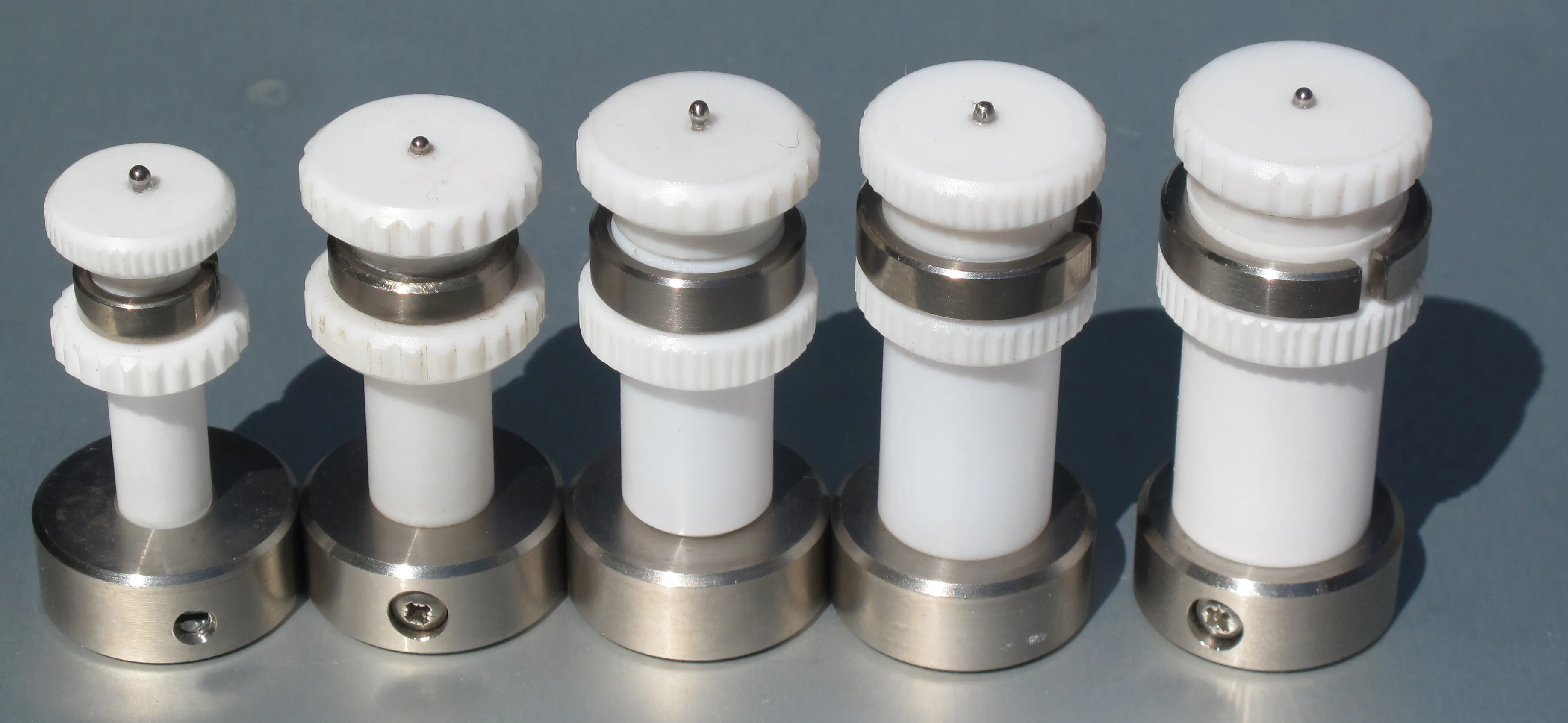
Traditional Teflon vials applicable for LS benzene counting, as produced by Perkin Elmer Inc., are 7.0 ml and 3.0 ml. Teflon as material defines counting performances. Working cycle depends on number of parts used and additional materials involved: metal, rubber and Teflon film.
Small 0.8 ml Teflon Vials
The small 0.8 ml vial fits into the row of vial volumes of 7.0 ml and 3.0 ml and can be standardized with different holders. Counting efficiency for C-14 was achieved up to 82% against a background count rate of 0.1 CPM, i.e., a "figure of merit" (FM) value = 67,240.
Modern Concept — Super Performances
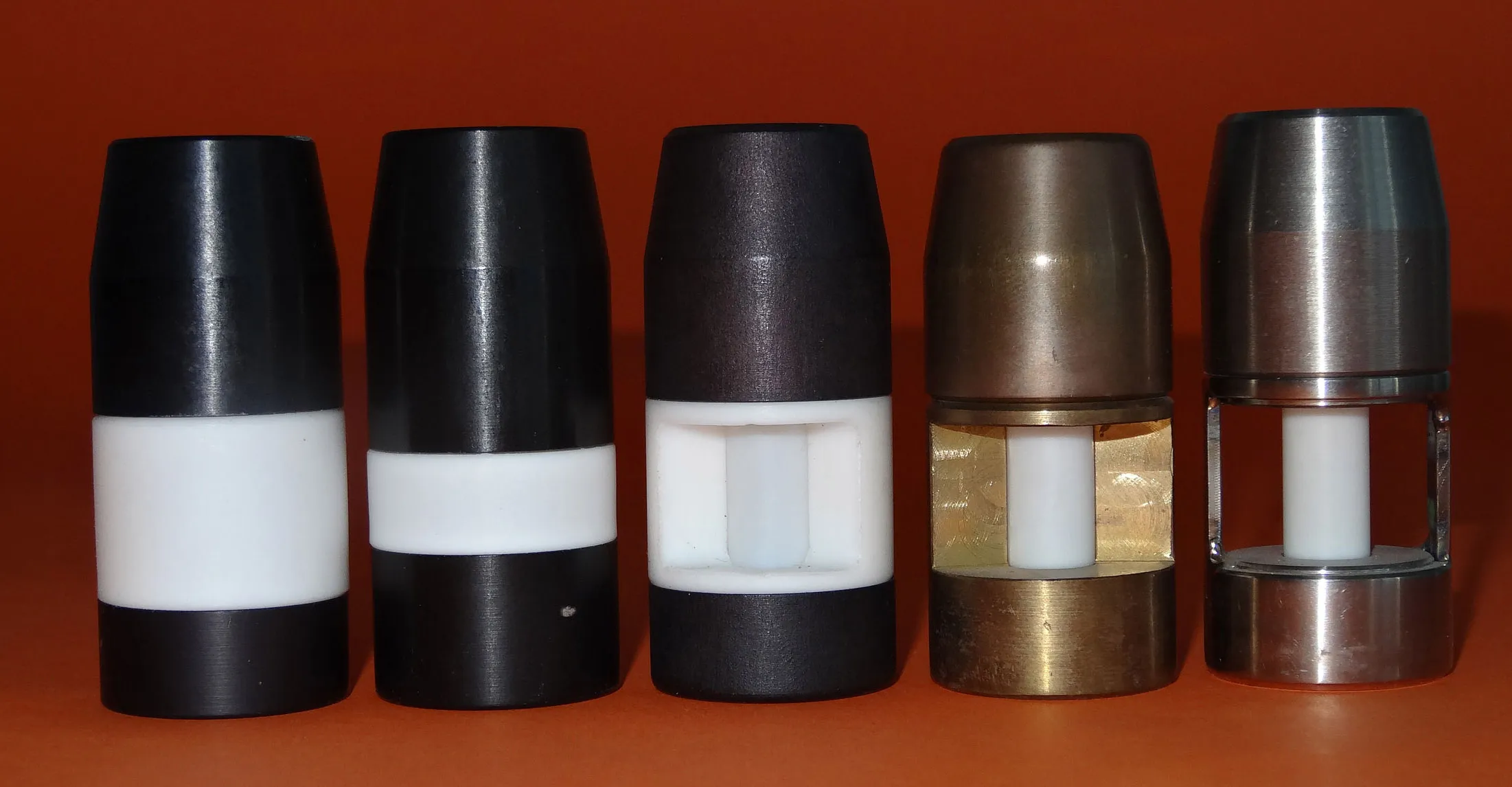
Modern concept vials allow long durability by avoiding screwed connections. Vials use spline coupling and metal washers. Hermetic vials have negligible benzene leakages.
Standardized benzene sample volumes: 7.0 ml, 4.5 ml, 3.0 ml, 2.5 ml, 1.5 ml, 1.0 ml
References
- Michael Buzinny and Vadim Skripkin. Newly Designed 0.8-ML Teflon Vial. RADIOCARBON. Vol 37, No 2 (1995) PP. 743-747
- VV Skripkin, MG Buzynnyi. Teflon Vials For Precise C-14 in Benzene Measurements. Biological and Chemical Research 4 (Issue 9), 229-233
- Vadim Skripkin, Mykhailo Buzynnyi. Teflon Vials for Precise C-14. LSC-2017 Conference, Copenhagen.